


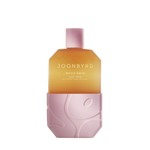
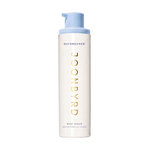
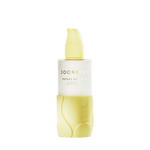
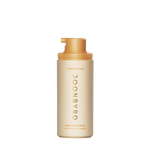
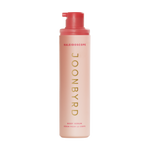

We believe body care should go beyond skin deep: delivering smooth skin while helping keep you healthy.
Scientific research increasingly shows that our skin plays an important role in our overall health, with skin dysfunction contributing to systemic inflammation. Put simply, when our skin is suffering, our internal health suffers too.
Our commitment to science and clinical testing means going beyond conventional trials to demonstrate measurable cellular improvements within the skin. We’ve partnered with US-based biotechnology lab, Outer Biosciences, to evaluate the effects of our Future Romance Longevity Body Glaze on human skin exposed to repeated UV stress, one of the primary drivers of skin aging.
Our active Future Romance Body Glaze was compared with both a placebo, non-active formulation and a leading benchmark moisturiser.
The Study
The study followed the biological cascade of UV-induced skin damage:
1. UV exposure on the skin
2. DNA damage
3. Cellular stress & inflammation
4. Matrix remodeling & collagen breakdown
5. Cell death if damage is severe
Measured Biomarkers
The study evaluated six complementary biomarkers that together represent the key biological processes involved in UV-induced skin aging.
1. IL-6 & IL-8: Markers of inflammation that increase following UV exposure and contribute to chronic skin aging, including collagen degradation.
2. MMP-1: An enzyme responsible for collagen breakdown and one of the strongest indicators of photoaging.
3. Thymine Dimers: Direct markers of UV-induced DNA damage within skin cells.
4. γH2AX: A marker of the skin's DNA damage response
and cellular stress.
5. TUNEL: A marker of severe cellular damage and apoptosis (cellular death) following UV exposure.
6. Histology & RNA Sequencing: Used to evaluate skin structure and identify biological pathways involved in inflammation, repair and barrier
Experimental Design
Day 0: Tissue procurement phase
Day 3-5: UV treatment
Day 6-9: Total treatment
Analysis
Results
1. Reduced Skin Inflammation
Future Romance Longevity Body Glaze significantly reduced two key inflammatory cytokines (IL-6 and IL-8) following UV exposure, demonstrating a measurable
reduction in UV-induced inflammatory stress.

2. Reduced DNA Damage
Future Romance Longevity Body Glaze reduced multiple biomarkers of UV-induced DNA damage, suggesting greater protection against cellular injury associated with photoaging. Demonstrated by reduced γH2AX and thymine dimer signals:

3. Supported Collagen Preservation
Future Romance Longevity Body Glaze reduced MMP-1, an enzyme responsible for collagen breakdown following UV exposure, indicating potential protection against
premature skin aging.

4. Protected Skin Structure
Microscopic analysis showed better preservation of skin architecture and epidermal integrity.

5. Supported Cellular Resilience
Future Romance Longevity Glaze reduced biomarkers of UV-induced cell apoptosis (cell death), preserving healthier, more resilient skin. Demonstrated by reduced TUNEL-positive cell signals.

Conclusion
The results were clear. Future Romance Longevity Body Glaze supports significantly healthier skin - helping to:
- Reduce UV-induced inflammaging
- Minimize markers of DNA damage
- Reduce collagen breakdown
- Better preserve the skin's structure
- Protect healthy skin cells and improve resilience